One Nation is on the rise — but do we know what it means?
The MinefieldPlay episode
Show notes
Over the last twelve months, there have been two conspicuous trends in federal politics. One is the precipitous decline in electoral support for the Liberal Party, which began before last year’s federal election and has continued apace ever since. The other is the rise in One Nation’s electoral fortunes, which began to tick upwards in September but then took a leap in December and January.
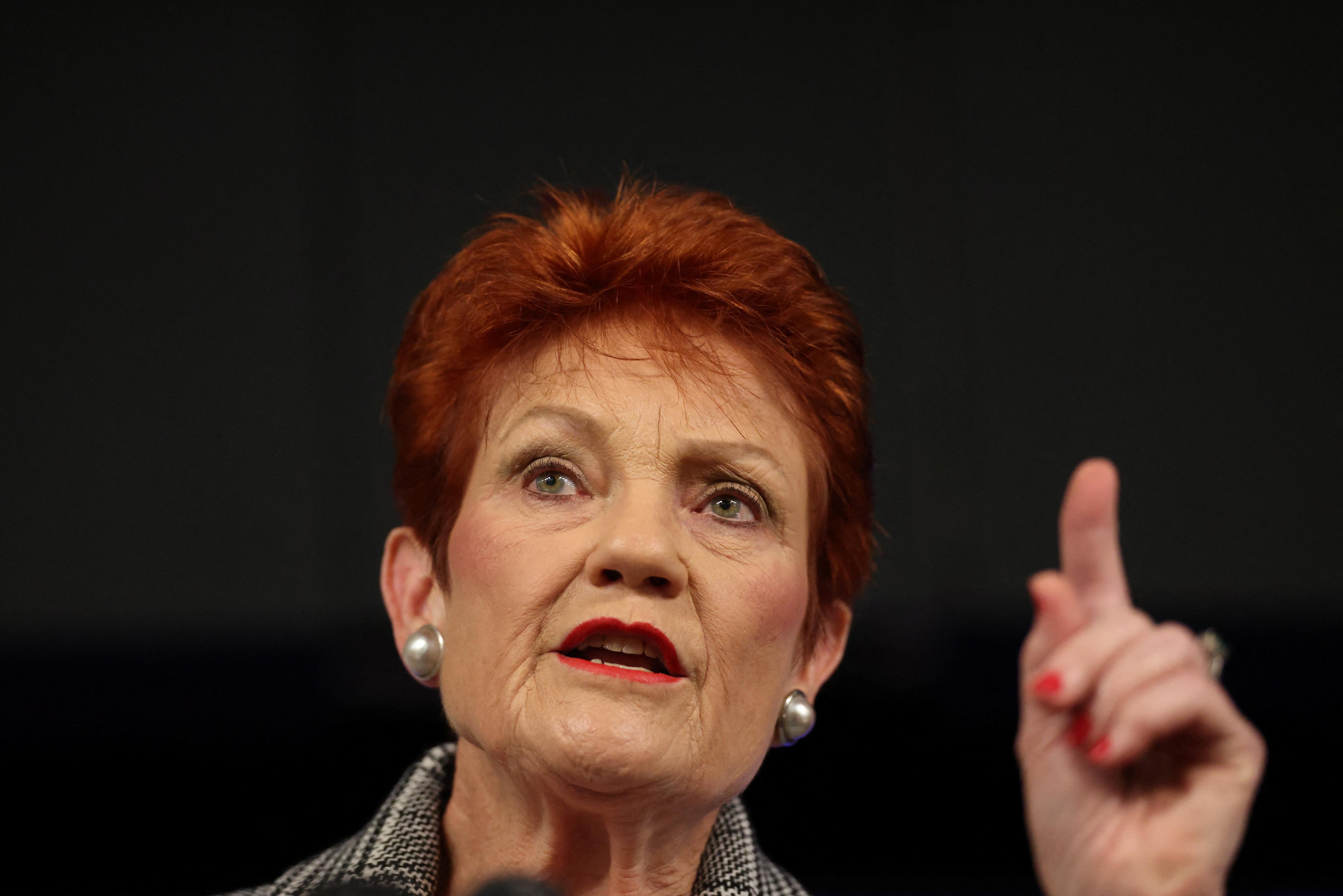
Both trends converged, rather spectacularly, in the latest Resolve Political Monitor, conducted for the Nine newspapers. Not only had the Coalition’s primary vote drop to 20 per cent (an all-time low), but One Nation’s primary vote shot up to 29 per cent (passing Labor on 28 per cent). Moreover, Pauline Hanson emerged as preferred prime minister with a third of respondents, while Anthony Albanese was selected by 29 per cent — opposition leader Angus Taylor took only 16 per cent of nominations.
This poll comes little more than a month after One Nation won the Farrer by-election in rural New South Wales, with a commanding 40 per cent of the primary vote, thereby gaining its first lower house seat in federal parliament. And it came days before Pauline Hanson’s first address to the National Press Club in Canberra, three decades after she entered parliament.
Almost exactly forty years ago, then opposition leader John Howard famously said “the times will suit me”. The same could now be said for Pauline Hanson. For three decades she has been a fixture of federal politics. The major parties have variously denounced and attempted to accommodate her views on immigration, multiculturalism and Indigenous policy, among other things. But while the political landscape around her has changed, she has not. If anything, due to the excesses of political rhetoric and perverse incentives of a social-media saturated informational ecosystem, the electorate has grown inured to what once would have been scandalous, perhaps even disqualifying. In an age of Trump, Hanson comes across to many voters as simply “plain spoken”, as the “voice of reason”.
The question, however, is whether One Nation’s electoral support is, in fact, an affirmation of the party, its policies (such as they are) and its leader, or merely a kind of aggregated discontent with the major political parties? Is One Nation the temporary beneficiary of voter anxiety and anger — with polling and by-elections here functioning as a means of political communication — or does this point to a more profound disintegration of two-party politics? Does One Nation’s current rise reflect what Pierre Rosanvallon described as the three-fold simplification at the heart of populism’s more general appeal (the simplicity of the ‘natural’ social bond over against the difficulties of multiculturalism; the simplification of the cause of current social problems; the simplification of the political remedy, over against the complexities of deliberation) at a time of dizzying complexity?
Either way, Pauline Hanson’s ability to both appeal to and harness electoral discontent in times that are characterised by “a near-constant sense of crisis, spanning the economic, social and political”, presents a challenge to the exercise of responsible political leadership — particularly that of someone like Anthony Albanese, whose moderation and commitment to a kind of gradualist centrism rarely touches the political passions that animate our current moment.
Then again, in the UK and Europe, far-right parties have tended to poll well between elections and have even enjoyed a degree of success in European parliamentary elections and by-elections, only to see their support fall away come the general election. Is something similar happening in Australia?
Guest: Paul Strangio is Emeritus Professor of Politics at Monash University and the author, most recently, of The Alchemy of Leadership: Seven Australian Prime Ministers in a Turbulent Twenty-first Century.