What will we lose if translation becomes wholly automated?
The MinefieldPlay episode
Show notes
It feels like, for so much of this year, in one form or another, we’ve been trying to count the costs that technological innovations are exacting on our humanity — how AI, in particular, is altering (perhaps irrevocably) our relationship to words, to writing, to beauty, to creativity, to taste, to work, to the natural world, to our interior life.
From the very beginning, our concern has been that the allure of convenience — or, better, of frictionlessness — is making us overlook or fail to reflect adequately upon what is lost when certain forms of difficulty are eliminated from our lives. After all, difficulty can be one of the ways we register the true value an activity. To lose the difficulty is to lose precisely what it is that makes the pursuit worthwhile in the first place.
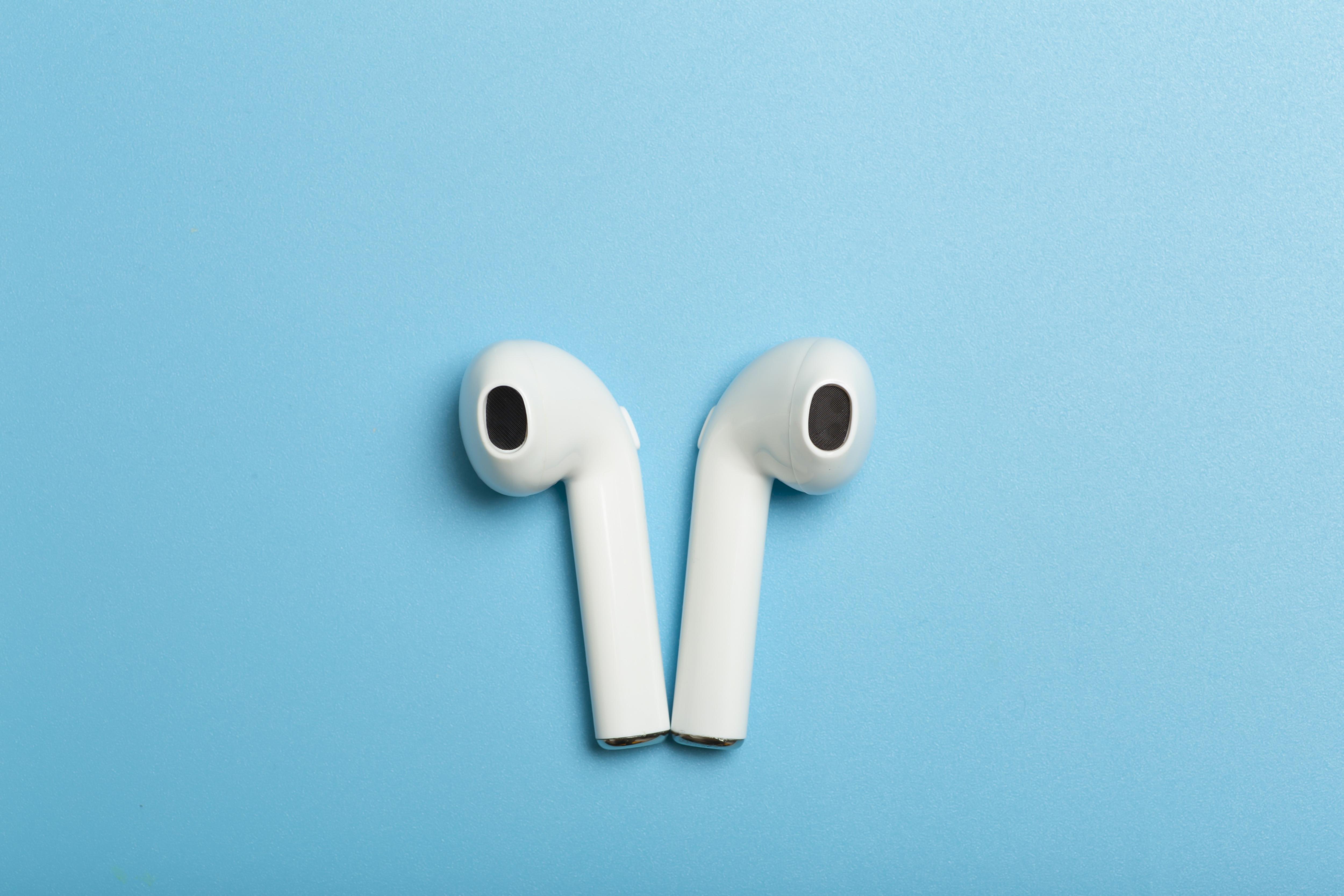
A perfect example of this dilemma presents itself in Apple’s announcement that its new AirPods would include a “Live Translation” feature that would allow users who speak English, French, German, Spanish and Portuguese to understand each other (with the promise of more languages to follow). Particularly for travellers, this technology promises to break down the language barrier and alleviate the stress of not being able to understand one’s taxi driver or waiter. It purports to be the digital equivalent of Douglas Adams’s “Babel fish” from Hitchhiker’s Guide to the Galaxy — your own private in-ear interpreter.
Now, there are questions about the AI technology — and the large language models that undergird it — that give plenty of reasons to doubt the adequacy or accuracy of the automated translation. As anyone who has tried Google Translate knows, the translation-by-prediction-and-equivalence that machine learning is capable of producing is most often shallow, error-ridden and has a tin-ear for idiom, allusion or humour.
But let’s leave those drawbacks to the side for now, and suppose that the technology will eventually be capable of producing fluent, largely accurate translations from one language into another. This still doesn’t overcome the importance of friction, of difficulty, the experience of being suspended between, not just languages, but also cultures and conceptual worlds, and the patterns and rhythms of expression that cannot easily be separated from the meaning of the sentences themselves. At best, automated translation can provide the illusion of, or a kind of ersatz substitute for, “understanding”.
To translate from one language into another — particularly when what is involved is poetry or literature — is not merely to find a series of relatively accurate equivalences; rather, it is to find oneself suspended between two worlds, acutely aware of precisely what is not translatable from one language into the other. And yet it is just this experience that at once exposes the limits of our own modes of expression and thinking, and opens up the possibility of creation, discovery and surprise.
If translation becomes one more of those difficult tasks we are content to sacrifice on the altar of convenience, we may find that the difficulty is not the only thing we lose.
You can read Ross Benjamin’s article “The Costs of Instant Translation” in The Atlantic, and his reflections on translating Daniel Kehlmann’s novel “The Director” on ABC Religion & Ethics.