What is the moral of Marlowe’s ‘Doctor Faustus’?
The MinefieldPlay episode
Show notes
There are four stories that could justifiably be described as foundational to Western culture: the temptation of Eve in the Garden of Eden; Prometheus’s gift of fire to humanity; Doctor Faustus’s pact with the devil; and Victor Frankenstein’s act of monstrous creation.
Not only are the principal names immediately evocative to anyone who hears them, but that recognisability allows for nearly endless variations on their original themes. This is, in part, what gives these stories their staying power.
But these stories could themselves be said to represent four variations on a still older theme: the longing for some forbidden knowledge, to transgress a proscribed limit — or as WH Auden would put it, the desire to “know too much”. In each instance, rightly or wrongly, the pursuit itself brings a severe punishment, even catastrophe. This is what gives each of these foundational stories an element of tragedy, of pathos. About whom could it not be said that, even though we know the danger of going too far, we want to do it anyway?
And yet it is at this point that an important difference emerges between Faustus and the other three stories. Eating from the Tree of the Knowledge of Good and Evil, granting fire to humankind and giving life to a “creature” of one’s own making all point a certain ambition, a restlessness, an unwillingness to remain in a perceived state of underdevelopment or adolescence. The consequences of that restlessness may still be both foreseeable and severe, and so suggest a lack of wisdom or trust or prudence — but that doesn’t mean the acts themselves are either base or self-seeking.
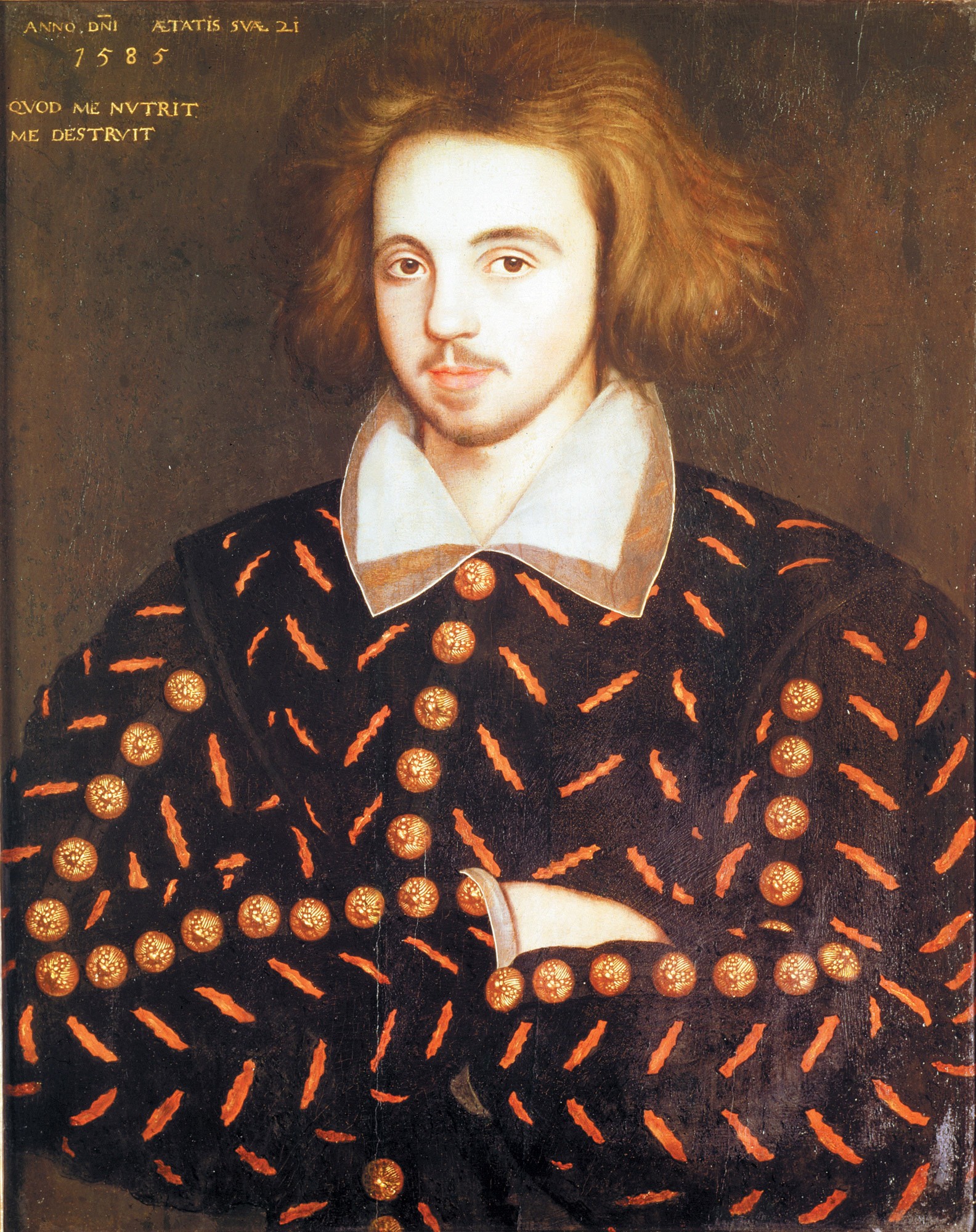
The same cannot quite be said of Christopher Marlowe’s depiction of Doctor John Faustus at the end of the sixteenth century. It is true that, at the outset, explicit reference is made to the flight of Icarus from Ovid’s Metamorphoses, who fastened wings to his back with wax, but which melted when he ventured too close to the sun. Speaking of Faustus: “His waxen wings did mount above his reach, / And, melting, heavens conspir’d his overthrow; / For, falling to a devilish exercise, / And glutted now with learning’s golden gifts, / He surfeits upon cursed necromancy …”
But even here, the point is not that Faustus went further than he should in his chosen disciplines, but rather that he abandoned them in favour of sorcery. And what Faustus seeks from the outset is not so much forbidden knowledge as it is wealth and renown — his own version of Lucifer’s sin of “aspiring pride and insolence” — and his attraction to necromancy’s “words of art” are mere means to that end.
In other words, the reference to Icarus places the emphasis not on the ambition of Faustus’s heaven-ward reach but on the precipitous nature of his subsequent fall. Indeed, the trajectory of Marlowe’s play could be said one of perpetual descent: from the heights of academia to the utter solitude of his plunge into hell.
In Marlowe’s play, it is not Lucifer who is the tempter, but Faustus who actively seeks out the means of his own “voluptuousness” — on the belief that the cost (“his soul”) can either be indefinitely deferred or that the bill will never come due (“Come, I think hell’s a fable”, Faustus says; to which Mephistopheles replies, “Ay, think to still, till experience change thy mind”).
The lesson of the tragedy of Doctor Faustus probably remains the ridiculousness of the exchange of long-term beatitude for short-term prosperity and pleasure. The bill always comes due. But what Marlowe also reminds us is that the punishment is already present in the solipsism, the self-enclosure of the lives heedlessly devoted to pleasure. As Mephistopheles puts it, “for where we are is hell”.
Guest: Kate Flaherty is the Head of English and Senior Lecturer in English and Drama at the Australian National University.