Why the anxieties over multiculturalism? What’s the appeal of a monocultural society?
The MinefieldPlay episode
Show notes
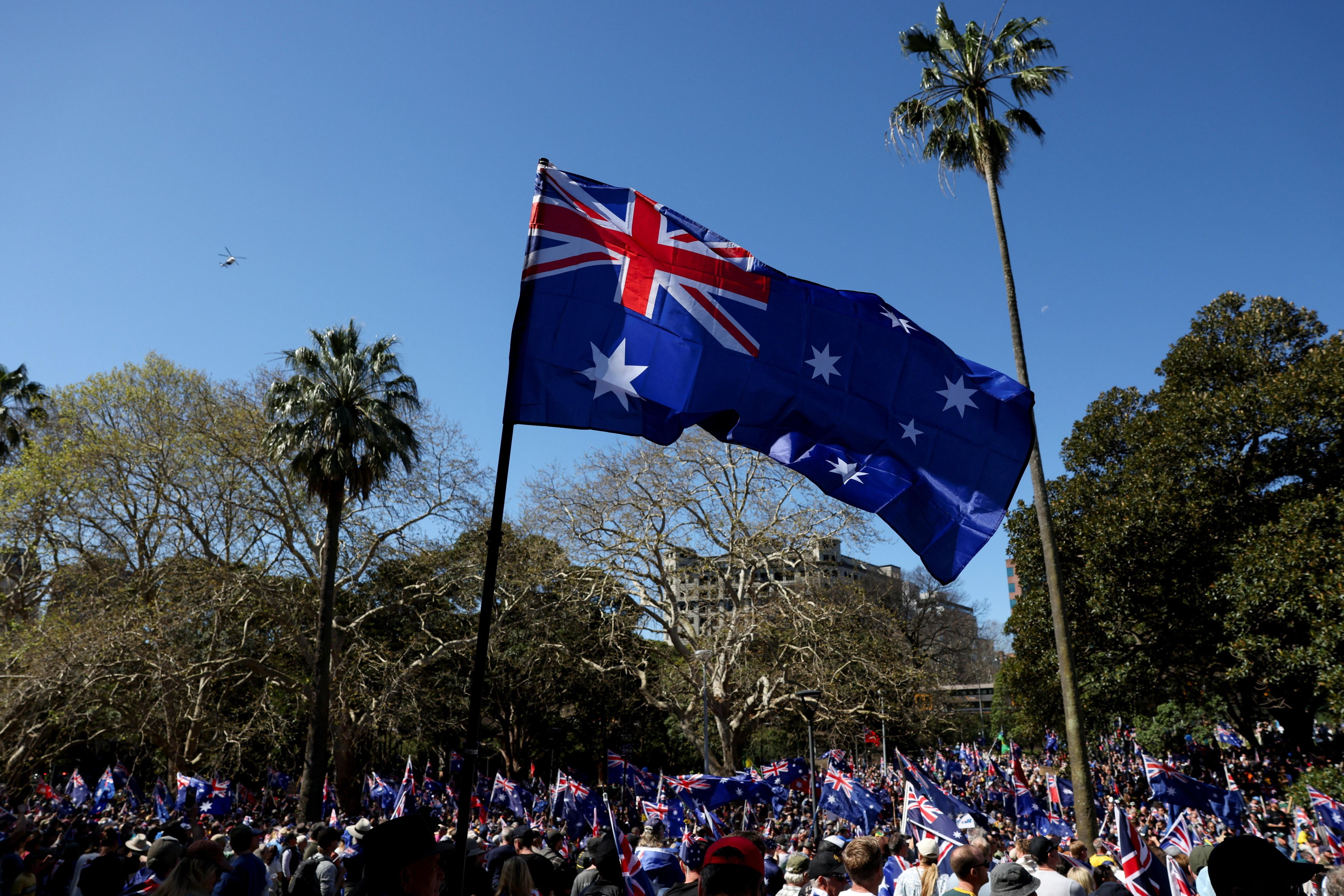
If One Nation leader Pauline Hanson managed to reignite a public debate with her assertion that Australia is “a multiracial society, but we must be monocultural” during her address last week to the National Press Club, it is only because certain anxieties over multiculturalism have long been smouldering in the social undergrowth, just waiting to be fanned into flame.
The question of immigration, handwringing over the racial constitution of the nation and the desire to maintain Australia’s essential “Britishness” go back at least as far as the 1901 Immigration Restriction Act. And these concerns continued to resurface throughout the twentieth century. As the then Minister for Immigration and future leader of the Liberal Party, Billy Snedden, said in 1969 (the year after Enoch Powell’s “Rivers of Blood” speech):
“I am quite determined we should have a monoculture, with everyone living in the same way, understanding each other, and sharing the same aspirations. We don’t want pluralism.”
It wasn’t long afterward, the White Australia Policy was dismantled and multiculturalism became official national policy, culminating in the 1989 National Agenda for a Multicultural Australia. Just seven years later, the rise of John Howard and the election of Pauline Hanson placed both multiculturalism and immigration back on the table.
Debates over the proper levels of immigration are, of course, entirely appropriate in a healthy democracy. Immigration policy is something about which citizens should be able to deliberate and disagree without fear being called xenophobic. But something potentially dangerous happens when the debate turns to multiculturalism, as longstanding government policy, itself. For then we are not discussing prudential concerns about the proper allocation of limited social and economic resources; instead, we are discussing the desirability, or not, of our fellow citizens, our neighbours, those with whom we find ourselves pursuing a common life. We are discussing who truly belongs, and who does not.
One of the dangers of the discourse about “the utterly flawed policy of multiculturalism” (as Hanson put it) is that it turns fellow citizens into abstractions, other cultures into barriers, our neighbours themselves into impediments one’s own sense of wellbeing and social comfort.
As John Dewey argued a century ago, it is not enough for our experience of democracy to be confined to elections and abstract values (call this the vertical orientation of democratic life); democratic habits must pervade everyday life and casual interactions with our fellow citizens (call this democracy’s horizontal or relational aspect). In the same way, multiculturalism cannot remain a government policy or series of eight goals; for it to become a moral reality, it must find inter-cultural expressions in civic life. It is in this way that we go from being strangers to one another, to fellow citizens.
The desire not to feel like “strangers in our own home” or to be a “monocultural” society is surely a form of the desire to eliminate strangeness from our lives, to achieve what Pierre Rosanvallon calls the radical “simplification of the social bond” through the commonalities of culture, custom and language. But what does this longing conceal, and what does it assume both about “culture” and “national identity”?
Guest: Glenda Ballantyne is a Senior Lecturer in Sociology at Swinburne University of Technology, and Coordinator of the Australian Intercultural Cities National Network.