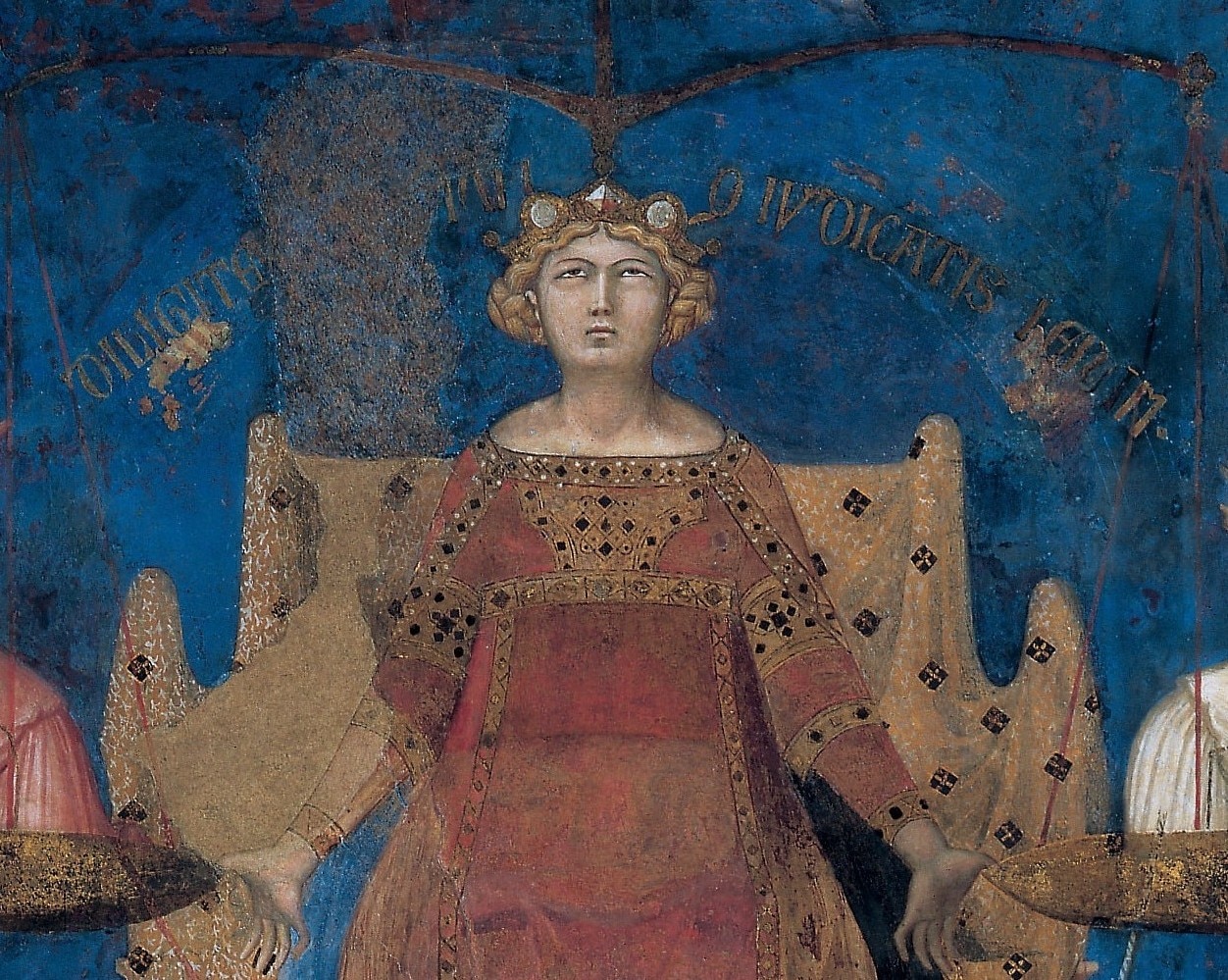
What can we learn about politics from Ambrogio Lorenzetti’s ‘Good and Bad Government’?
The MinefieldPlay episode
Show notes
It is one of the casualties of democratic politics that citizens rarely remain indifferent about the governments they elect. By investing politicians with their hopes or fears, their aspirations and anxieties, voters ensure that they will take the performance of a government personally. This is why politics cannot be emptied of emotion: electors and the elected are bound together by filaments of expectation and accountability, and the conditions of their common life depend on the maintenance of those delicate affective bonds.
But when contempt, corruption, greed, incompetence, inattentiveness, unresponsiveness, popular suspicion and outright violence are allowed to eat away at these bonds, it is the political and civil life of the nation as a whole that suffers. For in such conditions, good governance becomes impossible — either because politicians habitually treat the electorate with disdain or because voters are so aggrieved that they gravitate towards those who will give voice to their discontent.
That’s why it is imperative to do what can be done to strengthen the political, civic and moral bonds that connect citizens with one another and governors with the governed.
How might we cultivate the capacity to imagine that politics can, in fact, be a means of pursuing and achieving the good, that there are virtues inherent to the political vocation? It may well begin with the recovery of an almost pastoral vision of politics as what emerges out of a people’s concern to care for their common life.
It is just such an imagination that is richly on display in a series of murals painted by Ambrogio Lorenzetti on the walls of the Sala dei Nova (the Hall of the Nine, otherwise known as Sala della Pace, the Hall of Peace) in Siena’s Palazzo Pubblico between 1337 and 1340. Lorenzetti’s commission was at once to visualise the philosophical undergirding of the political system of Siena under the stewardship of nine self-selecting governors, and to remind those dispensing justice and those seeking it of the stakes of their deliberations.
Lorenzetti evidently drew on the political vision of the Nine — their own understanding of the virtues that are inherent to the vocation of good governance — and he/they drew liberally from the tradition of soulcraft/statecraft from the Italian renaissance, as well as from Seneca and Cicero, Augustine and Aquinas. The question is whether we, in our time, with our resources, can recover an analogously compelling vision of guarded optimism, of mutual accountability, of prudence and wisdom, such that we, too, can articulate the conditions in which politics can be a force for good.